In this reflection
Prophet Muhammad ﷺ —
The Greatest Leader
in Human History
10 qualities that built a civilization — and still speak directly to your heart today
"What kind of man walks into a city that tortured him for 13 years — and responds with the words: 'Go. You are all free'?"
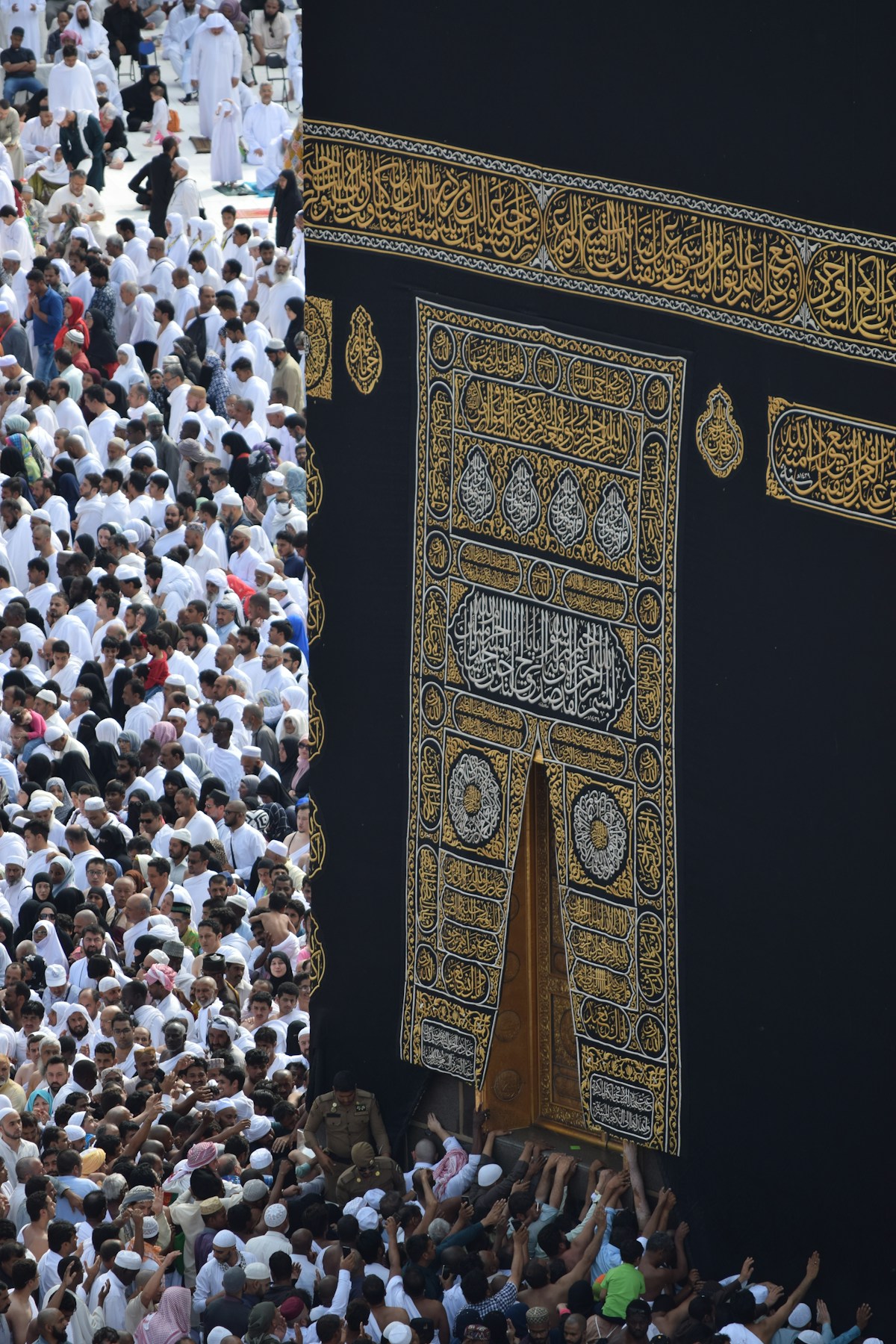
That is not a scene from a novel. That is history. That is the Conquest of Makkah, 630 CE. And that moment alone — that single, extraordinary act of mercy in the face of absolute power — tells you more about leadership than a thousand management books ever could.
We live in a world desperate for leaders. We've had rulers, celebrities, politicians, and CEOs. We've had charismatic speakers and powerful strategists. But leaders — genuine ones, who changed the world through the sheer weight of their character — are devastatingly rare.
Prophet Muhammad ﷺ was one. History agrees. His followers, obviously. But so do non-Muslim historians, philosophers, and thinkers who had every reason to be objective — and still couldn't help but marvel.
This is not a biography. The Seerah is an ocean — one post cannot contain it. This is an invitation. An honest look at 10 qualities that made the Prophet ﷺ not just the greatest leader Muslims have known, but arguably the most transformative human being who ever lived.
Read slowly. Something here will change the way you lead — whether in your home, your workplace, or your own heart.
Before We Begin: What the World Said About Him
Let's start with voices that cannot be dismissed as bias. These are not Muslims writing about their Prophet. These are historians, writers, and thinkers from entirely different traditions.
These men had nothing to gain and everything to lose by praising a Prophet of Islam. Their words endure because they were simply telling the truth.
The 10 Leadership Qualities That Changed History
He Led from the Front — Always
The Prophet ﷺ never asked his companions to do anything he hadn't done himself. When the trench of Khandaq was being dug and bellies were empty, he was there — digging alongside them, a stone tied to his stomach to suppress hunger, just like everyone else. When the mosques needed building, he carried bricks. When his family needed food, he fixed his own sandals and mended his own clothes.
This was not strategic optics. This was his character. And it produced something remarkable: people who would die for him — not out of obligation, but out of love. You cannot manufacture that kind of loyalty with a title or a salary. It only comes when people see that you are truly one of them.
The Hadith captures this beautifully: "None of you truly believes until he wishes for his brother what he wishes for himself." He didn't just teach this — he lived it, every single day.
He Was a Visionary When No One Else Could See
When the Prophet ﷺ arrived in Madinah with a small group of persecuted followers, he had no army, no wealth, and no political power. Within 10 years, the Arabian Peninsula had united under one message. Within 100 years of his passing, that message had spread from Spain to China.
But beyond geopolitics — his vision was fundamentally human. He saw a world where a Black man and an Arab man and a Persian man stood equal before Allah. At a time when tribal lineage determined your worth, he declared: "No Arab has superiority over a non-Arab, and no non-Arab has superiority over an Arab, except through taqwa." (Farewell Sermon, Sahih Muslim)
He announced the abolition of interest, the rights of women, the dignity of the poor — ideas so radical for their time that 1,400 years later, humanity is still catching up.
His Mercy Was Bigger Than His Power
The Conquest of Makkah is perhaps the most extraordinary moment in human leadership history. After 13 years of torture, boycott, assassination attempts, and exile — the Prophet ﷺ entered Makkah with 10,000 soldiers. His enemies stood before him, fully expecting execution.
He asked them: "What do you think I will do with you?" They said: "You are a noble brother, the son of a noble brother." He replied: "Go, for you are all free." (Ibn Hisham — Seerah)
Every single person was forgiven. This is not weakness. This is the highest expression of strength — choosing mercy when you are fully capable of revenge. It won more hearts that day than any sword ever could have.
And Ta'if — where he had been chased, stoned, and left bleeding — when the Angel Jibreel offered to crush the entire city between two mountains, the Prophet ﷺ said no. He made dua for them instead. "Maybe from their offspring will come those who worship Allah alone."
He Was Just — Even When It Cost Him
A woman from the noble Makhzum tribe was caught stealing. Her family sent a beloved companion, Usama ibn Zayd, to intercede — hoping the Prophet ﷺ would let her off because of her status. His response became one of the most quoted statements in Islamic history:
"The people before you were destroyed because when a noble person among them stole, they would let him go — but when a weak person stole, they would implement the punishment. By Allah, if Fatimah the daughter of Muhammad were to steal, I would cut off her hand." (Sahih al-Bukhari)
His own daughter. He used his own daughter as the example. This is the kind of justice that builds civilizations — and the lack of it is what destroys them.
"The secret of the Prophet's ﷺ leadership was not that people feared him. It was that they trusted him — completely, unconditionally, across every social class."
— Reflection from the SeerahHe Was the Most Emotionally Intelligent Human Who Lived
The Prophet ﷺ wept. Openly, without shame. He wept at the death of his son Ibrahim. He wept when his companion Sa'd ibn Mu'adh passed away. He wept in prayer out of awe for Allah. In a culture that celebrated the stoic warrior, this was revolutionary.
He also smiled constantly — his companions described his smile as one of his most notable characteristics. He remembered names. He gave people his full attention when they spoke. He sat with the poor, ate with servants, and played with children.
When a companion came to him and said, "O Messenger of Allah, I love you more than my family and my wealth" — the Prophet ﷺ didn't deflect or minimize it. He turned to him and said: "Then prepare yourself for hardship, for poverty reaches those who love me faster than a flood reaches its destination." He met vulnerability with honesty, not platitudes.
Modern psychology has a name for this: emotional intelligence. The Prophet ﷺ had it in its most perfect form — 1,400 years before the term was coined.
He Consulted — He Didn't Just Command
The Prophet ﷺ received divine revelation. He had access to guidance that no other human being has ever had. And yet — he consistently consulted his companions before decisions.
At the Battle of Badr, he chose a military position. A companion asked respectfully: "Is this a place Allah has chosen, or is it your personal strategy?" When the Prophet ﷺ replied it was his own assessment, the companion suggested a more strategic location. The Prophet ﷺ immediately agreed and changed the plan.
This is shura — consultation — and Allah commanded it in the Quran (3:159). The Prophet ﷺ didn't just practice it when convenient. He practiced it as a principle, because he understood that leadership is not about having all the answers. It's about creating an environment where the best answers can emerge.
He Was Consistent — Seen and Unseen
One of the most powerful things said about the Prophet ﷺ came from his wife Aisha (ra) when asked about his character. She said: "His character was the Quran." (Sahih Muslim)
She lived with him. She saw him when no one else was watching — in the private moments of morning and night. And what she described was a man who was exactly the same in private as he was in public. No performance. No different version for different audiences. The same patience, the same kindness, the same discipline.
This consistency is rare among human beings and almost nonexistent among leaders. It is what made the companions say of him: "I have never seen anyone more beloved to the people than the Messenger of Allah ﷺ." (Tirmidhi)
He Was Humble Despite Having Everything
When the Prophet ﷺ walked, he didn't stride ahead. He walked with people — beside them. When he sat, he sat on the ground with his companions, not elevated above them. He refused to let people stand when he entered a room.
A man once came to speak to him, trembling with awe. The Prophet ﷺ said: "Calm down. I am only the son of a woman who used to eat dried meat in Makkah." (Ibn Majah) He humanized himself deliberately — not as a political tactic, but because it was simply who he was.
He was the head of state, the commander of armies, the final Prophet of Allah — and he mended his own sandals, swept his own house, and milked his own goats. Power never changed him. This is perhaps the rarest quality of all.
💡 Leadership Insight: The Prophet ﷺ demonstrated what modern leadership researchers call "servant leadership" — the idea that the greatest leaders are those who see their role as serving their people, not being served by them. Harvard Business School formalized this concept in the 1970s. The Prophet ﷺ lived it in the 7th century.
He Built People, Not Just Systems
The Prophet ﷺ didn't just give his companions instructions — he transformed them. Men who were burying their daughters alive became fathers who wept with tenderness over their children. Warriors who lived for tribal revenge became people who forgave enemies for the sake of Allah.
Bilal (ra) — a Black slave who had been tortured until he could barely speak — became the first person whose voice called the Ummah to prayer. The Prophet ﷺ didn't see Bilal's background. He saw his taqwa. He saw his potential. And he elevated him.
This is the mark of a transformational leader: they don't just use people to achieve goals — they create the conditions for people to become their best selves. Every companion who left the Prophet's ﷺ presence was a better human being for having been there.
He Carried Pain — and Never Let It Harden Him
The Prophet ﷺ lived a life of extraordinary suffering by any human standard. He lost his mother at 6, his grandfather at 8, his beloved wife Khadijah (ra) after 25 years of marriage — in the same year he lost his uncle and protector Abu Talib. He outlived most of his children. He was mocked, exiled, boycotted, nearly assassinated, and fought in dozens of battles.
And yet — in all of this — he never became bitter. He never closed his heart. He never used his pain as an excuse to harden, to withdraw, or to treat others cruelly. If anything, the suffering made him more tender.
When his infant son Ibrahim died in his arms, he held him and wept, and said: "The eyes shed tears, the heart grieves, but we say nothing except what pleases our Lord. And indeed, O Ibrahim, we are sorrowful for you." (Sahih al-Bukhari)
This is the leadership of the soul. To carry pain with grace, to grieve with honesty, and to never let your wounds become weapons against others.
What This Means for You — Right Now
You may not be building a civilization. You may be raising children in a small apartment, managing a team of five, leading a family through hardship, or simply trying to lead yourself through another difficult day.
The Seerah was not sent down for people in positions of power. It was sent down for human beings. And every one of the qualities above is a quality you can practice — today, in your own life, at whatever scale you're operating.
-
Lead by example first
Before asking anything of others — ask it of yourself. The Prophet ﷺ never asked what he hadn't already given.
-
Choose mercy when you have the power to punish
Forgiveness is not weakness. The Prophet ﷺ proved it's the highest expression of strength. Someone in your life deserves a free pass today.
-
Be just — even when it's expensive
Apply the same standard to yourself that you apply to others. If your own daughter would not be excused — then neither should you be.
-
Practice shura — ask for input
The Prophet ﷺ consulted despite having revelation. You consult because you're human. Seek the wisdom in the people around you.
-
Be the same person in private
The truest test of character is who you are when no one is watching. Aisha's testimony was about the private man — and he was the same.
"O Allah, send Your blessings upon Muhammad and upon the family of Muhammad."
The Prophet ﷺ said: "Whoever sends one salawat upon me, Allah will send ten blessings upon him." — Sahih Muslim
Frequently Asked Questions
Why is Prophet Muhammad ﷺ considered the greatest leader in history?"He came with no throne, no army of his own, no inherited fortune. He came with only his character — and it was enough to change the world forever."
ﷺ Sabr And Sukoon — Where faith meets the searching heart
Continue reflecting

The Healing Power of Kindness in Islam: Small Acts, Cosmic Rewards, and the Path to True Sukoon
How cultivating "Rifq" (gentleness) and "Ihsan" (excellence) transforms your mental health, strengthens your faith, and unlocks divine mercy. Written by the…
The Psychology of Truthfulness in Islam: How Honesty Heals Mental Chaos
Truthfulness and Mental Peace In a world where social media filters, corporate politics, and societal pressures often encourage us to wear masks, living…
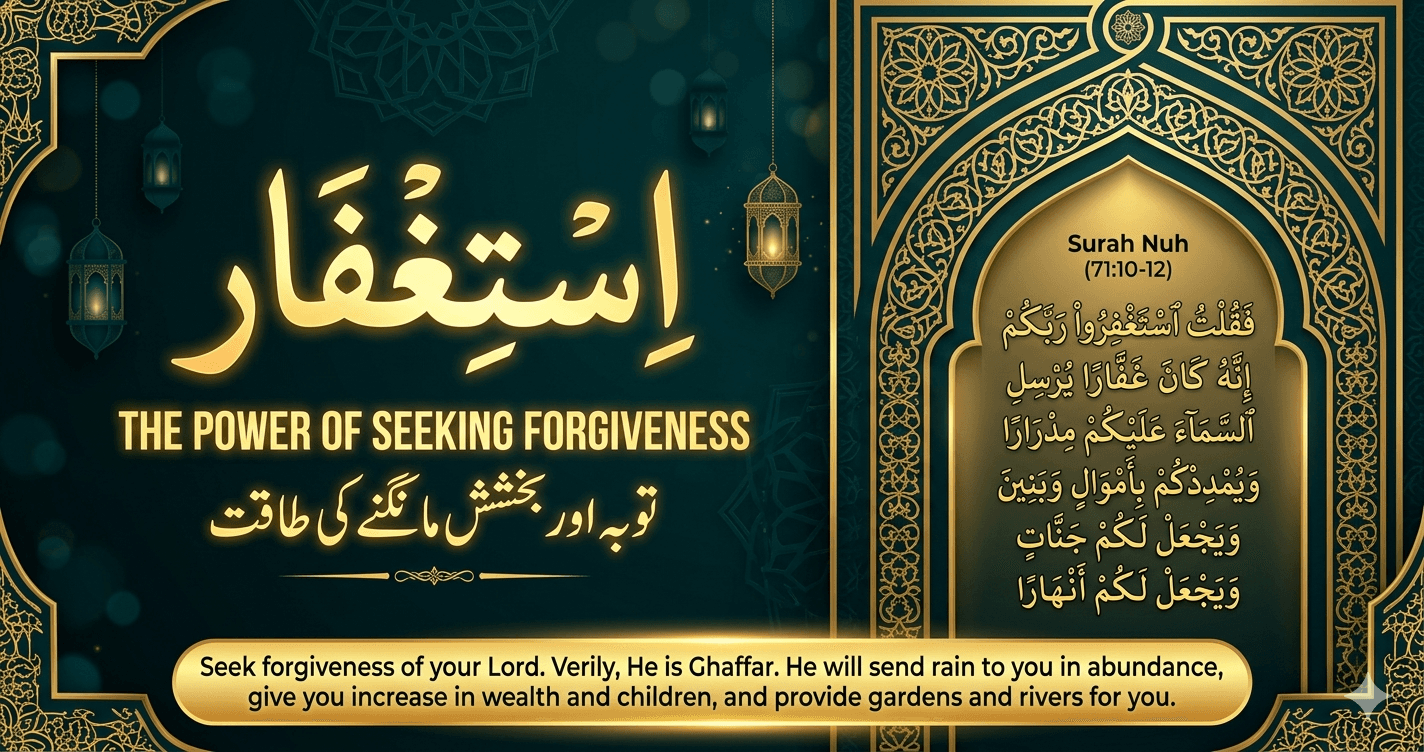
Istighfar – The Key to Barakah in Rizq and Life
Faith & Barakah Istighfar — The Key to Barakah in Rizq and Life Why seeking Allah's forgiveness may be the most overlooked door to abundance Nazia Firdous · June 5,…